

Beginner's Guide to Urban Exploration for Hidden Gems
A practical, ethics-first introduction to urban exploration in the UK: how to research hidden sites, stay legal and safe, and leave them exactly as you found them.
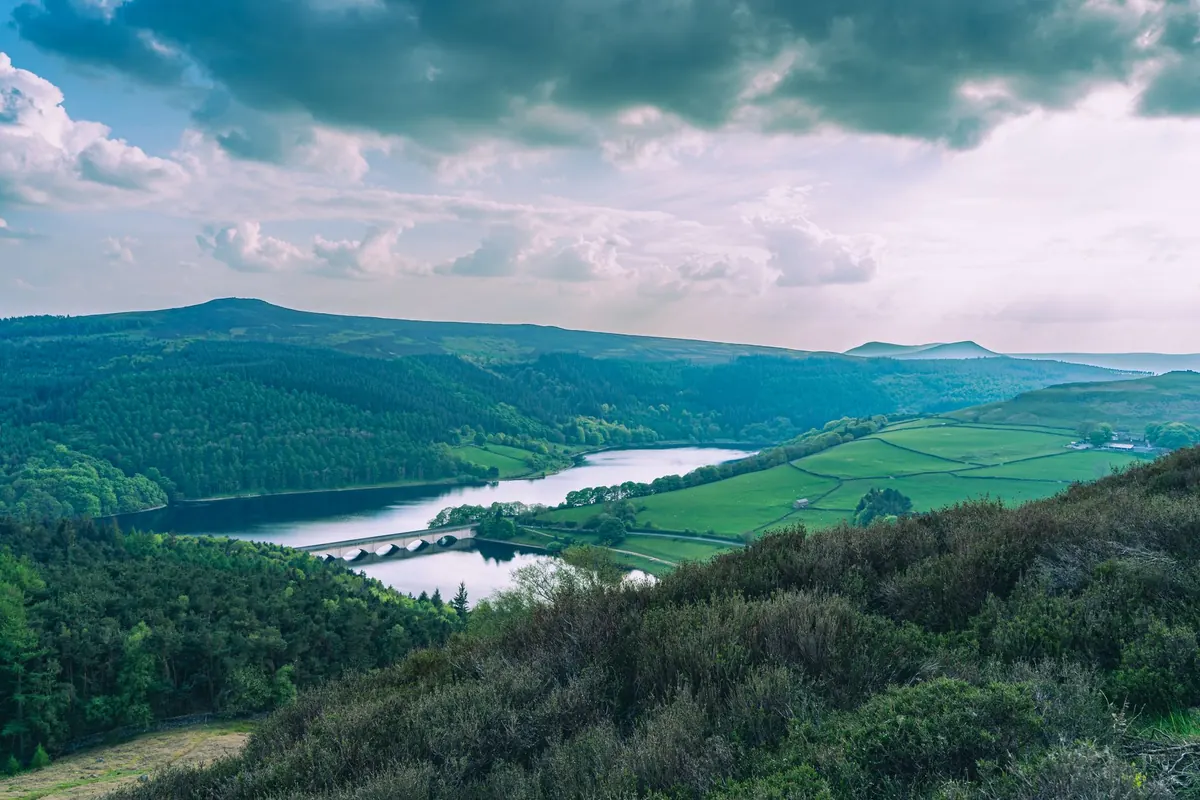
Every town in Britain has one. The cinema that closed in 1978 and never quite got demolished. The pillbox half-swallowed by brambles beside a footpath nobody walks. The Victorian reservoir behind the housing estate, fenced but visible from the bus. Urban exploration — urbex, if you have seen the hashtag — is simply the habit of going to look properly. Done well, it is one of the cheapest and most interesting ways to see the country. Done badly, it is a quick route to a fine, an injury, or a site ruined for everybody who comes after. Here is how to begin.
What Urban Exploration Really Involves
The word suggests rooftops and gas masks. In practice, most of it is walking. Derelict mills, disused railway cuttings, canal tunnels, chalk pits, wartime pillboxes, abandoned chapels, overgrown follies and the odd forgotten footpath are all fair game. So are the bits of a town that locals have stopped noticing: a walled cemetery, a Victorian waterworks, a stretch of riverbank where the old wharf timbers still show at low tide.
The best trips are rarely the most dramatic. A mile of towpath with a good map and a flask often beats a rushed scramble through a collapsing warehouse. If you take nothing else from this, take this: you do not need to break in anywhere. The most memorable finds tend to be places you can reach legitimately — public footpaths, open access land, country parks with industrial remains, or sites where the owner has said yes.
Staying on the Right Side of the Law
Entering private land without permission is trespass, and while trespass alone is usually a civil matter in England and Wales, that is not the comfortable fact it sounds like. It can become a criminal matter quickly: aggravated trespass, criminal damage, railway bye-laws, or the protections attached to scheduled monuments and listed buildings. "Abandoned" does not mean "ownerless". Somebody still owns the site — often a council, a developer, or a holding company waiting for planning permission.
Scotland's access rules are broader for open land, but they do not cover buildings or private grounds, and the four nations differ in the detail. Railway land and active construction sites are a flat no. Never force a door, lift a board or cut a fence. If you want access to a specific building, ask the owner: a short, polite message explaining that you would like to photograph the place and will share the images often gets a yes, and it turns a nervous scramble into a proper visit. If you are unsure about a particular site, a notice, or a protection order, speak to a solicitor who deals with property or heritage law rather than relying on a forum thread.
Kit, Preparation and the Boring Bits That Matter
You do not need much, but you do need the right things. A friend is not optional on a first trip.
- Boots with ankle support. Trainers slide on rubble; wellington boots offer no grip on wet stone.
- A decent torch, spare batteries, and a second small torch in a pocket.
- Work gloves, and a dust mask rated for fine particles if there is any chance of asbestos, mould or bird droppings.
- A charged phone, a power bank, and a paper map in case the signal goes.
- Water, a snack, and a small first aid kit you know how to use.
- Something high-visibility if you will be near a road, yard or car park.
- A plan left with someone at home: where you are going, and when you will check in.
Leave the crowbar at home. No tools means no temptation, and a much shorter conversation if you meet a landowner or a police officer.
Hazards You Cannot See
The obvious risks — a rotten railing, a spike-topped fence — are rarely the ones that catch people out. The real dangers are quieter.
Floors, stairs and voids
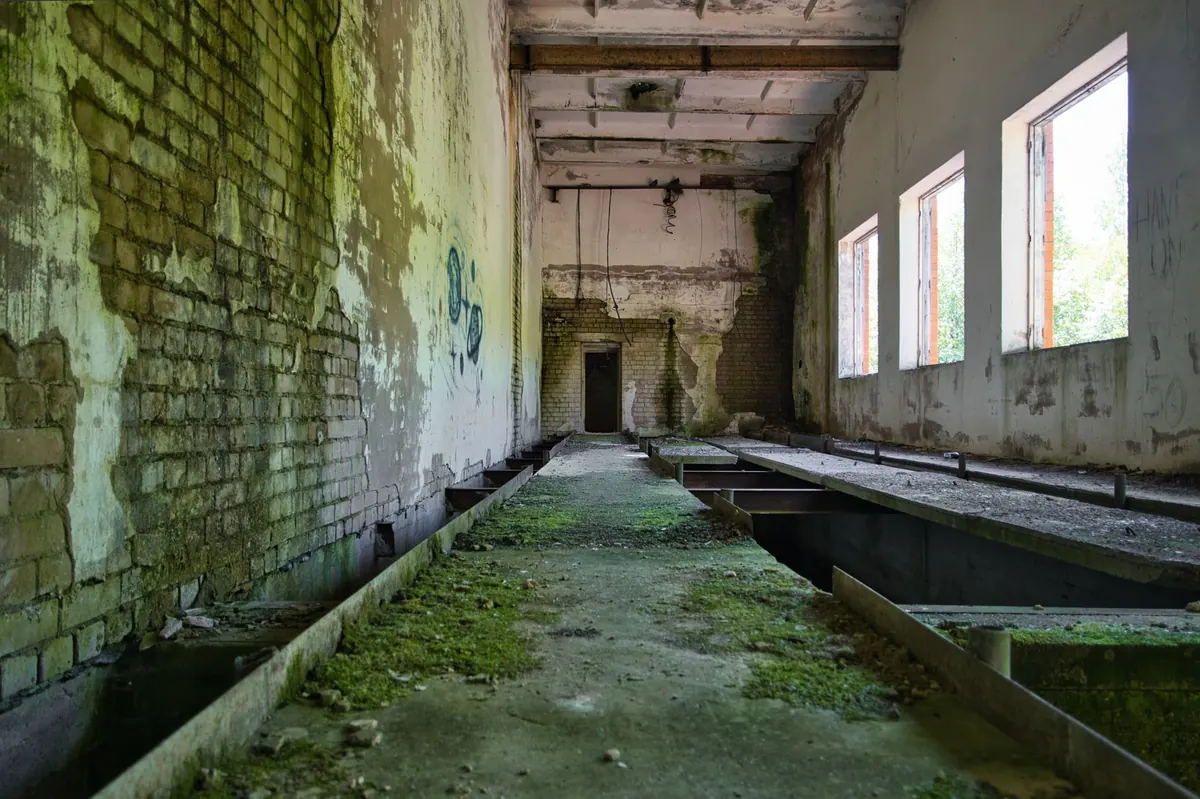
Derelict buildings rot from below. A landing that looks solid can be a sheet of chipboard over a two-storey drop. Keep your weight near walls and over joists, test every step before committing, and look up as often as you look down. Loose masonry, hanging glass and unstable chimney stacks are common.
Air and dust
Buildings from the mid-twentieth century onward frequently contain asbestos, and it is most dangerous when disturbed. Stagnant water, rat urine and droppings, and poor ventilation in sealed cellars are all worth thinking about. If a space smells wrong, or your head starts to swim, turn around. Drains, culverts and other confined spaces carry gas and flood risks that need training and equipment — they are not a beginner's outing.
Weather and water
Culverts and tunnels can fill within minutes of heavy rain, even miles away from where it falls. Tides catch people on causeways and in estuaries. Silt is deeper than it looks. Check the forecast twice, and never enter anything that takes water if rain is coming.
If you cut yourself on something rusty, or get bitten or scratched by a rodent, get medical advice rather than hoping for the best. Tetanus and Weil's disease are both far easier to treat early. Contact your GP, or NHS 111 if you are unsure.
Leave No Trace: The Ethics That Keep Sites Open
The code is short. Take nothing, leave nothing, break nothing. In practice that means not shifting objects for a photograph, not adding graffiti, and not posting precise locations of fragile places. A geotagged picture can send hundreds of people through a site in a weekend, and the usual result is a new fence or a demolition order. If you find something historical — bottles, tools, paperwork, a name scratched into a window — leave it where it sits. Removing it is damaging, and on protected sites it can be an offence. Worthwhile finds are best reported to the local Historic Environment Record, or to the county archaeologist.
Also: close gates, keep dogs under control around livestock, stay out of people's gardens and windows, and carry your litter out, including cigarette ends.
Finding Hidden Gems Worth the Trip
Research is where the good days come from.
- Ordnance Survey Explorer maps mark ruins, disused railways, quarries and works. Anything labelled "dis" deserves a look on the ground.
- Layer historic maps over modern ones. Old county series sheets show buildings that have vanished from the landscape entirely.
- Your council's planning portal tells you what is happening to a site, and who is responsible for it.
- Local studies libraries, archaeological journals and old newspapers are full of places that no one has written about online.
- Public rights of way are your best friend: a footpath can run alongside or even through a site, and walking it is entirely legitimate.
Before travelling far, check that the place still exists. Recent satellite or street imagery will show whether it has been flattened, and it saves a wasted drive. Local history and walking groups are the other reliable source. A retired postman who remembers what the building was thirty years ago is worth ten forum threads.
Your First Trip, Step by Step
- Pick something low-stakes: a footpath past a ruin, a country park with industrial remains, or a site you have permission to visit.
- Go in daylight, on a dry day, with one or two people and a fixed turnaround time.
- Park legally and never block a gate or a farm entrance.
- Look before you step, and check what is above you as well as what is underfoot.
- Stay near the edges of a building rather than crossing the middle of a crumbling floor.
- If you are asked to leave, leave. Politely, immediately, first time.
- Write down what you saw when you get home. Half of exploration is the record.
The genuine hidden gems are usually modest: a damp canal tunnel, a wartime pillbox with a 1941 name still legible inside, a churchyard tomb carved for a factory owner nobody remembers. Keep your expectations low, your boots dry and your manners good, and you will start seeing parts of the country that most people drive straight past.
Photo: Estonian Stalker / Pexels