

A Beginner's Guide to British Cryptids: From Nessie to the Beast of Bodmin
A practical introduction to British cryptids — Nessie, the Beast of Bodmin, big cats and folkloric beasts — plus how to research sightings with a sceptical eye.
Every country ends up with the monsters it deserves, and Britain has gathered a quiet, grey, oddly brilliant collection of them. A serpent in a Highland loch. A panther on a Cornish moor. A black dog on a Suffolk church porch, and something with wings in a Cornish village. Some of these are folklore, some are eyewitness reports, and a few may be real animals that nobody has yet managed to photograph properly. Here is how the main British cryptids fit together, and how to look into them without losing your head.
What counts as a cryptid
A cryptid is an animal whose existence is not accepted by mainstream science, either because a known species is being reported well outside its normal range, or because the creature has never been described at all. Cryptozoology, the loose hobby that studies them, is not a science. It is a pastime, a subculture, and occasionally a very good research exercise.
The first useful habit is to separate two kinds of claim. Black Shuck, the East Anglian devil-dog said to have burst into the churches at Bungay and Blythburgh in 1577, belongs to legend. The scorch marks on the Blythburgh door are real; the demonic explanation is not. A large cat on Bodmin Moor, by contrast, is a plain biological claim. An animal is either out there or it is not. A folk tale can be true as a story and false as natural history, and both can be worth your time, but mixing them up ruins the investigation before it starts.
Nessie, Morag and the long tradition of loch monsters
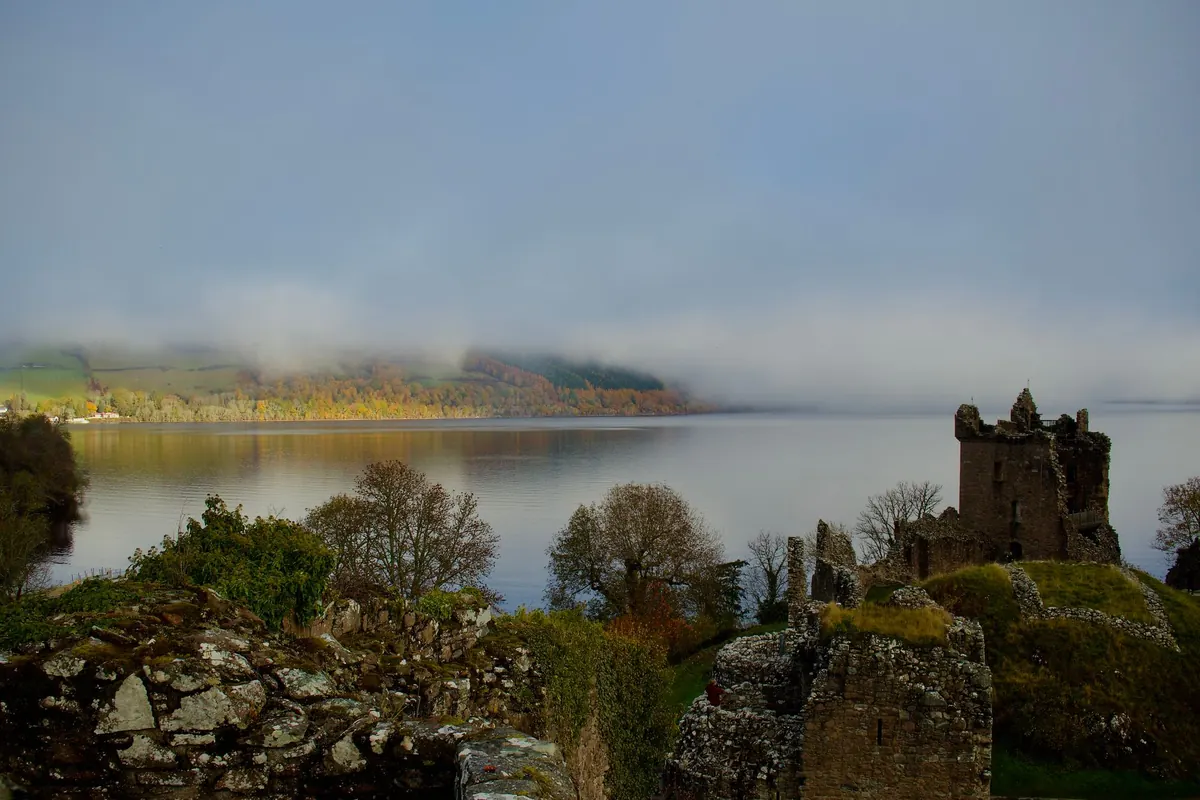
Loch Ness is the anchor of British cryptozoology, and its modern phase began in 1933, when a local hotel manageress described a whale-like creature to the Inverness Courier and the story travelled worldwide. The most famous image, the "surgeon's photograph" published in 1934, was admitted decades later to have been a hoax built around a toy submarine. That single fact explains a lot about how monster stories are made: one good picture can outlive a hundred dull observations.
Nessie is not alone. Loch Morar has Morag, described in similar terms. Cornwall has Morgawr, a sea serpent reported off the south coast, and a handful of other sightings that blend into older tales of sea beasts. Notice the pattern: a deep, dark, badly surveyed body of water, a road along the shore, a small tourist economy, and a newspaper willing to print a sighting on a slow news day.
Britain's big cats: Bodmin, Exmoor and the Fen Tiger
Alien big cats, usually shortened to ABCs, are the most plausible British cryptids, which is exactly why they attract serious attention. Bodmin Moor's reputation hardened in 1978 after a run of livestock killings. The Beast of Exmoor produced national headlines in 1983 and, reportedly, a search by Royal Marines. Cambridgeshire has its Fen Tiger; Surrey, Sussex and the Scottish Borders all have their own versions.
Why the theory refuses to die
The Dangerous Wild Animals Act 1976 required owners of exotic animals to hold a licence. The popular argument runs that some keepers released their cats rather than pay for one, and that a small breeding population has clung on ever since. It is a plausible mechanism, but plausible is not the same as proven. A government review in the mid-1990s found no conclusive physical evidence, and no one has produced a body, a skull, or a run of sharp photographs. Most sheep kills blamed on big cats turn out to be dog attacks. The question is not really "do they exist", but "what evidence would settle it" — and that is a far more interesting thing to chase.
Five more British cryptids worth knowing
- Black Shuck — the East Anglian ghost dog, tied to the 1577 church incidents at Bungay and Blythburgh and still reported in Suffolk and Norfolk.
- Spring-heeled Jack — a leaping, clawed figure that terrified London and the Midlands from the 1830s, and a fine case study in how rumour spreads through print.
- The Owlman of Mawnan Smith — a winged humanoid reported near a Cornish church in 1976, among the strangest of the modern accounts.
- Kelpies and water horses — Scottish loch and river spirits that predate every modern monster story by centuries.
- The Lambton Worm — a County Durham legend about a dragon-like creature, preserved in song and local pride rather than in any sighting file.
Why Britain breeds monsters
We have excellent habitat for uncertainty. Hundreds of lochs and reservoirs, forestry plantations with no sightlines, moorland that looks identical in every direction, estuaries and sea caves. Add weather that flattens distance and light, and a witness can be a hundred metres from something and still have no way to judge its size against a known object.
We also have a long oral tradition and a national press that enjoys a monster. Sightings cluster after coverage, which is not proof of fakery. It is simply how attention works: once a story is in circulation, people notice things they would otherwise have dismissed, and some of them report what they saw.
How to research a claim without being fooled
- Find the earliest version. Trace a story back to its first written account. Most websites recycle each other, and small details harden into fact along the way.
- Read the original if you can. Old newspaper archives are free to search at many local libraries, and the difference between a witness's words and a later summary is often startling.
- Ask what the witness could actually see. Distance, light, duration, whether they had binoculars, whether the animal was partly hidden. A two-second glimpse of something brown crossing a road is weak evidence, and should be described as such.
- Check the provenance of photographs. Ask who took it, when, with what, and where the original file or negative lives. A picture whose only source is a re-uploaded image is worth very little.
- Look for what is absent. No scat, no hair recovered from a fence, no roadkill, no clear trail-camera footage, decade after decade. Absence proves nothing on its own, but it is data.
- Expect the news cycle. When checking a date, look at what else was in the papers that week.
Getting out there yourself
The best fieldwork is unglamorous. Pick a site with a real claim attached and go at dawn or dusk, when animals move and the light is still usable. Take binoculars, a notebook and a phone. Record the date, time, weather, wind, distance, direction of travel and how long you watched, even when you see nothing, because a run of empty records tells you something about a place.
Use a known object for scale whenever you can, and sketch what you see before you try to name it. If a photo is the only record, keep the original file. Respect access: stay on public rights of way, ask permission before crossing private land, follow the Countryside Code, and never disturb livestock, nests or dens. Report honestly — describe what you saw, not what you think it was, and say plainly when you are unsure. A notebook full of careful observations is a far better result than a story you cannot stand behind.
Photo: Lucas Carlini / Pexels